Archive for

Kayla Williams on PTSD, Recovery, and Life After War

Posted on July 31, 2014

Plenty of Time When We Get Home: Love and Recovery in the Aftermath of War
by Kayla Williams
WW Norton, 272 pages, $26

When SPC Kayla Williams and SGT Brian McGough met at a mountain outpost in Iraq in 2003, only their verbal sparring could have betrayed a hint of attraction. Brian, on his way back to base after mid-tour leave, was wounded by a roadside bomb that sent shrapnel through his brain. Kayla waited anxiously for news and, on returning home, sought out Brian. The two later married, but neither anticipated the consequences of Brian’s injury on their lives. Lacking essential support for returning veterans from the military and the VA, Kayla and Brian suffered through post-traumatic stress amplified by his violent mood swings, her struggles to reintegrate into a country still oblivious to women veterans, and the indifference of civilian society at large. They fought for their marriage, drawing on remarkable reservoirs of courage and commitment. They confronted their demons head-on, impatient with phoniness of any sort. Inspired by an unwavering ethos of service, they continued to stand on common ground. Finally, they found their own paths to healing and wholeness, both as individuals and as a family, in dedication to a larger community.

You and your husband, Brian, met and both served in combat in Iraq. That must have been quite an experience. Where does the title ‘Plenty of Time When We Get Home’ come from? Was that something you used to say there?

Brian and I met on the side of Sinjar Mountain in the summer of 2003. He was funny, smart, sarcastic, handsome – I was intrigued, but it was a combat zone. We couldn’t exactly go on a date! One day I confessed that I wanted to get to know him better, and he replied, “There’s plenty of time for that when we get home.” Shortly thereafter, he was very seriously wounded and nearly died; I thought that chance was lost forever.

I was part of the initial invasion of Iraq in 2003 and, as an Arabic linguist, actually got to talk to lots of Iraqi people. Although I hadn’t believed in the rationale given for the war, hearing their stories of suffering under the Ba’ath regime and hope for a better future made me think that perhaps we had done the right thing, even if it was for the wrong reasons. Perhaps in part because of my ability to speak the language, I wasn’t able to “dehumanize the other” – I always saw the Iraqis as people just like us, not as an amorphous, evil, monolithic enemy. But as the insurgency took root, when Brian and other troops that I knew were injured, it became much harder to hold on to that sense of shared humanity. I became more afraid and also angrier. At the same time, I could see how it seemed we were getting trapped in a vicious cycle: as the Iraqis used more violence against US troops, we hardened our defenses and used harsher tactics, which increased the number of Iraqis willing to turn to violence, and so forth. Once that spiral begins, it seems virtually impossible to change course.

The ethos of “leave no fallen comrade behind” was deeply ingrained in me…Our shared experiences in Iraq also helped us both have a sense of what the other had been through, and deeper patience for certain problems-or even shared symptoms.

What was it like being a young woman in an army at war? And what was it like when you were on R&R, or when you finally made it home? Did you feel somewhat like a unicorn in that people only think of things like ‘our boys over there’ and not much about the girls over there? What’s the difference between how people see or treat woman veterans and how they see or treat men?

During major combat operations, my gender was only important to the extent that it was an asset to the mission: as a woman, some Iraqi people-especially women-were more willing to talk to me when I accompanied the infantry on combat foot patrols in Baghdad. However, once we moved into SASO (stability and support operations) and had more down time, all kinds of interpersonal tensions arose – which included sexual harassment, making me feel more isolated while on the deployment. When we got home, it was immediately clear to me that most civilians had no idea what military women were experiencing downrange. Some asked if I was allowed to carry a gun as a woman, while others asked if I was in the infantry, which is still not authorized. When groups of us would go out for beers, someone would frequently buy the guys a round to welcome them home, and women were excluded: people assumed we were wives or girlfriends, not veterans ourselves. That made me feel further alienated from a country that had come to feel foreign while I was gone. Looking around, I realized that the only women troops in the popular press were Jessica Lynch and Lynddie England, who were not the women I wanted representing the service of hundreds of thousands of women service-members – that’s what drove me to write my first book, Love My Rifle More Than You: Young and Female in the US Army.

When it comes to relationships, a lot people see difficulty and they run away from it. I guess Brian must have needed real help after his injuries and suffering from PTSD. A lot of other people, men or women, may have shrugged away from that. You also had your own issues to deal with from the war and coming back home as well. But you and Brian fell in love instead. Do you think this had to do with your individual personalities or that it had more to do with your common experience as soldiers? How did you or both of you approach trying to find some normalcy and build a life together after what you went through at war?

Falling in love was related to our individual personalities. My willingness to stay with him through the very worst stages of his recovery, when his TBI (Traumatic Brain Injury) and PTSD symptoms were most severe, was definitely related to my military service. The ethos of “leave no fallen comrade behind” was deeply ingrained in me, a sense of duty that seemed lacking in civilian society-witness famous men who have divorced or cheated when their wives developed breast cancer, for example. Our shared experiences in Iraq also helped us both have a sense of what the other had been through, and deeper patience for certain problems-or even shared symptoms; both of us hated crowds and fireworks when we first came home. The flip side to that is that we were both imbued with the military mind set of “suck it up and drive on,” an unwillingness to admit difficulty and ask for help. I sometimes wondered if I would’ve sought help, for myself and for him, sooner if I were a civilian. We really flailed around for several years, not knowing how to get our lives back on track. Participating actively in veterans advocacy was tremendously beneficial for us, both in terms of helping derive meaning from suffering by seeking to use our own experiences to advocate for improvements for those coming home after us and by giving us a community.

As far as PTSD and TBI are concerned, whenever there are incidents with veterans the media seem quick to jump on the point right away, which seems to be at odds with the virtual ‘hero worship’ of veterans that goes on otherwise. Vets seem to be saints or sinners with little room in between. What do you think can or should be done to reach a better public understanding or dialogue on PTSD and TBI?

It seems in a sense that we’re heroes while we wear the uniform, and then as soon as we take it off we’re perceived as broken. It’s very frustrating – and it is a challenge for me as an advocate to paint a nuanced picture. As a whole, veterans are more highly employed, educated, and paid than our civilian peers who have never served – so you should hire us, support your kids if they want to serve! On the other hand, a minority of veterans struggle tremendously, often as a result of trauma they experienced in the military, and as citizens we are morally obligated to ensure that there are adequate systems and services in place to support them on their journeys to healing and recovery. Bridging the civil-military divide requires action on both sides: veterans must be willing to try to explain what we experienced, and civilians must be willing to try understand. [Author and ex-Marine] Phil Klay wrote a great piece about this – people are willing to suspend disbelief to enjoy movies or books about vampires and aliens, putting themselves into those worlds, but say “I can’t imagine what it was like” to veterans. Well, try to imagine! Read works by veterans and try to develop an understanding. And we need meet civilians halfway, instead of just agreeing that they could never understand; we need to share as we are able so that our world is not a mystery.

There have been a lot of bad stories in the press over the last several years about poor conditions or services at military and VA hospitals. What was the support like on the home front when you both made it back? What support did you get from the military when transitioning? What about the Department of Veterans Affairs? What was your experience?

Brian got tremendous emergency medical care from the military – his survival and high functioning are practically miraculous given the severity of his injuries. However, his follow-up care once he became an outpatient was horrible. He got no rehabilitation and was returned to his duty station where his primary care provider had no understanding of TBI or PTSD. Once we were married, I got neither training nor support on how to fulfill my new role as a caregiver. When we first sought care at the DC VA Medical Center, neither of us felt comfortable. However, a few years later we separately reengaged with VA for care – I went to Martinsburg, West Virginia, which is a shorter drive from our house, and Brian went back to the DC VA – and both of us got sensitive, culturally informed, high-quality care. Clearly continued improvements are necessary. However, we also know from seeking care in the civilian sector that many providers outside the VA are not at all knowledgeable about how to treat combat injuries, physical or psychological.

Undoubtedly, America will go to war again at some point. What would you tell young men and women who are about to go off to war for the first time if you could? What do you wish someone would have told you?

The advice I give to young people considering military service is to cry in the bathroom, not have sex with anyone in your unit, and work hard in order to earn respect based on your ability to do your job well-don’t sham. I think it’s actually good advice in the civilian sector, too.


Kayla Williams, an Iraq War veteran and former Arabic linguist in the U.S. Army, is the author of Love My Rifle More than You and Plenty of Time When We Get Home. She lives with her husband Brian and their two children in Virginia.

Joshua Rovner on Iraq and the Politics of Intelligence

Posted on July 30, 2014

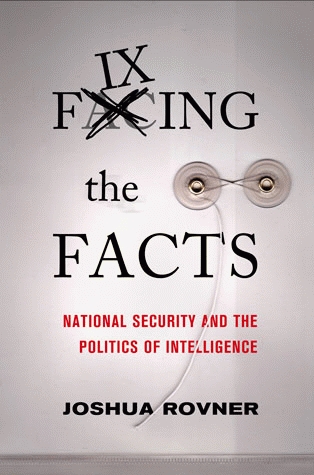
Fixing the FactsFixing the Facts: National Security and the Politics of Intelligence
By Joshua Rovner
Cornell University Press, 280 pages, $35

In Fixing the Facts, Joshua Rovner explores the complex interaction between intelligence and policy and shines a spotlight on the problem of politicization. He describes how the Johnson administration dealt with the intelligence community during the Vietnam War; how Presidents Nixon and Ford politicized estimates on the Soviet Union; and how pressure from the George W. Bush administration contributed to flawed intelligence on Iraq. He also compares the U.S. case with the British experience between 1998 and 2003, and demonstrates that high-profile government inquiries in both countries were fundamentally wrong about what happened before the war.

So just what is “politicization” of intelligence? Some—often those accused of doing the politicizing—tend to wave away its existence or import or even argue “intelligence is politics.” What is it and why is it important to look at?

Politicization is a word we use all the time without defining it. Some observers use it whenever there is overlap between the worlds of intelligence and policy. Others shrug it off because they assume there’s no way to keep those worlds apart. To some extent this is true: if intelligence agencies are to play any part in the policy process then they must work closely with their policy counterparts. But calling the normal day-to-day interaction “politicization” isn’t very useful for our understanding of intelligence-policy relations. One of the things I do in the book is describe routine relations and then explain why politicization is a sharp deviation from the norm.

Politicization happens when leaders make a strong public commitment…they rely on the PR value of intelligence estimates. If it turns out that standing intelligence does not actually support their decisions, they may pressure intelligence officials to change it.

I define politicization as the manipulation of intelligence to reflect policy preferences. Sometimes policymakers pressure intelligence leaders to change their views so they line up with stated policy. Sometimes intelligence analysts color their findings in ways consistent with their own views. In either case the result is that political bias creeps into estimates.

Politicization is important because it has terrible effects on the quality of intelligence. In the short term, it causes intelligence analysts to present their findings with unrealistic confidence, even when the underlying information is patchy and unreliable. Politicization occurs when issues are open to multiple and competing interpretations. If the answers were obvious there would be no reason to turn to intelligence in the first place. But those who are interested in using intelligence to win political arguments cannot abide estimates that are hedging or inconclusive. So they manufacture exaggerated intelligence and pretend that it represents a firm consensus.

In the medium term, politicization inhibits reassessment even after better information emerges. This happens because intelligence agencies have bureaucratic reasons to avoid reviewing their own work. Having published firm and unequivocal conclusions, they have no incentive to conduct the kind of reassessment would reveal that their earlier findings were not just wrong but aggressively wrong. The upshot is that bad analyses linger long after they should be discarded.

In the long term, politicization poisons relationships between intelligence officials and policymakers. Episodes of politicization reinforce negative stereotypes on each side: policymakers view intelligence officials as bureaucratic obstacles, and intelligence officials view policymakers as bullies. Relations can deteriorate so badly that intelligence plays little role in helping policymakers understand events.

You point out that there is no law requiring policymakers to heed intelligence estimates and they have free reign to reject or accept them in whole or in part. That being the case, why would policymakers seek to actually change intelligence estimates?

Intelligence scholars have offered a number of explanations. One is that leaders have a psychological need for support when facing difficult choices, so they cajole intelligence to provide analyses that justify their decisions. Another explanation has to do with organizational design. When intelligence and policy agencies are co-located then policy preferences will somehow seep into intelligence products, even when policymakers do not deliberately seek to politicize estimates.

The best explanation, however, has to do with domestic politics. Leaders use intelligence estimates to win over sceptics at home when they make controversial policy decisions. Intelligence is a powerful advocacy vehicle because intelligence agencies are in the business of secrets, and individuals tend to overrate secret information. Thus when leaders use intelligence in public debates, they claim they have access to unique sources and deserve the benefit of the doubt.

Politicization happens when leaders make a strong public commitment to a controversial new policy. In these cases they rely on the PR value of intelligence estimates. If it turns out that standing intelligence does not actually support their decisions, they may pressure intelligence officials to change it. Uncommitted policymakers may remain open to intelligence that contradicts their beliefs, but after going public they are much less tolerant. They fear that if they accept contrary intelligence and reverse course they will look feckless and weak. They also fear that their political rivals will embarrass them by leaking estimates that make their decisions look unnecessary. Under these conditions, they have strong incentives to make sure that intelligence estimates are consistent with their public statements.

Post-war inquiries either ignored policymakers’ role or defined politicization so narrowly that is was unlikely to appear…when investigators looked at the issue they only asked whether intelligence officials and analysts were the victims of direct pressure. They did not explore the variety of other ways that policymakers can exert influence.

The U.S. government post-mortems on Iraq—the WMD Commission, the Senate investigation—have roundly laid the blame on the intelligence community for the Iraq WMD intelligence failure. However, as Robert Jervis points out, these reports—by agreement—left out investigation of the role policymakers and politics played in the outcome. Does this mean that only half the story of what led to this intelligence failure is being told?

That’s exactly what it means. Post-war inquiries either ignored policymakers’ role or defined politicization so narrowly that is was unlikely to appear. As I point out in the book, there are many different ways to politicize intelligence—some crude, some subtle—but when investigators looked at the issue they only asked whether intelligence officials and analysts were the victims of direct pressure. They did not explore the variety of other ways that policymakers can exert influence.

Those on the other side of the debate argued that intelligence agencies weren’t to blame at all for the Iraq debacle. They suggest that the intelligence community would have gotten it right if policymakers hadn’t twisted their arms.

Neither side is completely right. A review of the declassified estimates from 1998-2003 shows that intelligence analysts started with plausible but erroneous assumptions about Iraq. Their views about Saddam Hussein, while understandable given his behaviour in the 1980s, were not consistent with his actions in the 1990s. Analysts were suspicious about Saddam’s intentions, though they were admirably candid about how little they knew about his unconventional weapons programs.

All this changed in the summer before the war, when the Bush administration came under public pressure to justify the war. At this point it started leaning on intelligence to exaggerate information on Iraq and to make sure public intelligence supported the president’s claims on Iraq. Policy pressure caused intelligence officials to transform their suspicions about Saddam into firm conclusions about Iraqi capabilities.

The Iraq story wasn’t simply about intelligence blunders or policy bullying. What happened was a total collapse in intelligence-policy relations. Intelligence agencies started with false assumptions, and policy pressure caused them to transform worst-case scenarios into most-likely estimates.

Regarding Iraq, you draw a comparison between the U.S. and UK intelligence communities. Politicization is supposed to be eliminated from U.S. intelligence through physical and systemic “buffers” between policymakers, whereas in the UK system there is mixing between policy and intelligence professionals. Talk a little about this contrast.

Major U.S. intelligence headquarters are geographically and symbolically removed from the Washington policy fray, and they have layers of bureaucratic insulation separating analysts from decision-makers. This is based on the widely held belief that organizational design is the key to mitigating politicization. No similar distance exists in the United Kingdom, where the intelligence and policy communities are intertwined.

Curiously, however, the difference seems to have had no effect on the pattern of intelligence-policy relations before the war in Iraq. In both cases politicization occurred at the same time and for the same reason. The Bush administration and the Blair government both faced opposition to the war in Iraq, and both pressured intelligence officials to exaggerate the case against Saddam in order to overcome domestic sceptics. If organizational design was a key cause of politicization, we should have seen different outcomes. The fact that we did not suggests that it is not as important as we previously believed. It also means that there is no organizational fix for the problem of politicization.

Are there any other episodes of the politicization of intelligence that are worth further exploring?

The most important unexplored cases are outside America. I included the UK case in the book in order to see whether my theory could travel. I believe it does, but I’m the first to admit a lot more work is needed. Some exciting new work is emerging on intelligence-policy relations in Israel, Italy, the UK, and elsewhere. I suspect we’ll know a great deal more about these cases as intelligence archives become available. I’m also optimistic because of the really smart and ambitious scholars – people like Uri Bar-Joseph, Rose McDermott, Keren Yarhi-Milo, and Matteo Faini—who want to know how intelligence affects strategy and policy, and who are also interested in how it works in different political systems.

Is there any hope of keeping politics out of our intelligence, or is this something we should not really worry about as long as it does not get out of hand?

We are never going to keep politics completely out of intelligence, nor should we. Effective intelligence officials must be able to maneuver in the political world or they will have little influence on policy. This is increasingly important as intelligence agencies compete with an array of competitors for attention: traditional media, cable news, think-tanks, and social media. Finding ways of convincing policymakers that intelligence agencies are still relevant without overselling the quality of intelligence will be extremely difficult.

Dealing with politicization is another matter. The task here is not keeping politics out of intelligence but making sure that political biases do not determine intelligence conclusions. Unfortunately there is no simple solution, and the easiest methods-organizing intelligence to create distance from policymakers, etc.-have failed.

The best way to reduce politicization is to bring back the norm of secrecy. The recent move toward transparency led intelligence agencies to publish sanitized versions of estimates on current issues. The goals of this sunshine policy are laudable – democracy requires government openness - but the effects on intelligence-policy relations are terrible. If the public expects the government to declassify intelligence on controversial policies, then policymakers will have very strong incentives to make sure that intelligence agencies stay in line. Perversely, the desire for a more informed public debate actually encourages politicization, which leads to bad intelligence, which leads to a misinformed public. Restoring secrecy will help put a stop to this vicious cycle. It will also allow intelligence and policy officials to speak candidly, just as we encourage open discussions through mechanisms like doctor-patient confidentiality and attorney-client privilege.

What are you working on next in this field—or others?

I’m in the early stages of a new book on strategy. I also have a few articles coming out this year with Caitlin Talmadge on U.S. military power in the Persian Gulf. Our work uses hegemonic stability theory and the British experience there to make arguments about the appropriate force posture moving forward. A related piece coming out soon deals with limited war theory and the problems of recognizing victory. A third project I’m working on here at SMU with Tyler Moore involves IR theory and cyberspace, with reference to the issue of whether intelligence agencies should exploit known software vulnerabilities or reveal them to be fixed by vendors.


Joshua RovnerJoshua Rovner is the John Goodwin Tower Distinguished Chair in International Politics and National Security at Southern Methodist University, where he also serves as Director of Studies at the Tower Center for Political Studies. His book, Fixing the Facts, is winner of the 2011 Edgar S. Furniss Book Award given by the Mershon Center for International Security Studies and the 2012 International Security Studies Book Award from the International Studies Association.


The Future of America’s All-Volunteer Force

Posted on July 29, 2014

For the sake of our military and the Republic it defends, we must cultivate a societal and organizational shift that sees military service not as the noble obligation of the few, but as an opportunity for the many. The many benefits offered as part of the greater American social contract should be contingent upon, at the very least, the willingness to give to their nation before receiving from it. Meeting this objective will require fundamental legislative and bureaucratic shifts to allow the All-Volunteer Force to maintain its dominant international status at a less strenuous cost, in both its short-term cost and its long-term fiscal obligations, on our nation.

The All-Volunteer Force has succeeded magnificently. Forty years later, however, the fuel for that success, namely fiscal largess, is in unquestioned risk. As Milton Friedman correctly observed, the All-Volunteer Force is the proper military for the defense of a Republic founded upon freedom. To ensure its continued success, however, will require significant adjustments to benefits and retirements to maintain the bedrock of security the world relies upon today, and maintain its existence in the near future of limited budgets. The current status of half our serving enlisted as careerists is unnecessary, expensive and unwise.

The current military retirement system remains a vestige of the draft-era military…In our current national financial state, revisiting some of these bypassed considerations is critical to ensure the health and viability of the military.

Almost 75% of American 17-24 year-olds are ineligible for military service for legal, physical, or educational reasons. The military already competes for the best of America’s youth. This increasingly limited recruiting pool is less damaging to the military than it is to society as a whole. Margaret Mead accurately saw the societal benefits of universal service. “Universal national service,” she noted, “in addition to solving the problem of fairness for those who are asked to serve in the military, in contrast to those who are not, is above all a new institution for creating responsible citizens alert to the problems and responsibilities of nationhood in a rapidly changing world.”

The current military retirement system remains a vestige of the draft-era military. At the time of its inception, the long term costs of the All-Volunteer Force model were largely minimized in the desire to quickly create a volunteer force capable of facing the immediate Soviet threat. In our current national financial state, revisiting some of these bypassed considerations is critical to ensure the health and viability of the military. Of the 16 major studies of the U.S. Military Retirement system from 1948 to 2005, only one (the 1st Quadrennial Review of Military Compensation of 1967-1969) recommended contributory retirement. There is a fundamental assumption in these reviews that we need to maximize the time in service of our professionals. This assumption is flawed. The military is strengthened by youth and diversity, which our current “20 or nothing” retirement plan discourages. Constrained intellectually by the 20-year retirement, to encourage service beyond the 20-year mark is obviously beneficial-why pay two service members (one serving, one retired) for the same position?


Recruitment Costs

Some argue a more mature military is a strength. As a Reservist, I see areas of the military art where the wizened warrior is of benefit. By and large, however, the military is a young man’s (and woman’s) profession. The Marines have developed a younger force by virtue of an admirable combination of recruiting and adherence to historical cultural norms. The average age of a Marine is 25 (while the other services all average around 29-30 years old). The Marines have deliberately developed a commanding position where being a Marine, former or otherwise, is a benefit in and of itself. Young Marines are given leadership authority at a lower rank and the service enjoys personnel costs significantly lower than their fellow services. To the great benefit of the National Guard, many of these former Marines fill our ranks continuing their service to our nation in an equally admirable, yet less expensive manner. The larger services cannot hope to emulate a recruiting strategy formulated on 70 years of immaculate strategic communication. But they can look at a recruiting strategy of “get in, get out, and move on” and attempt to emulate that successful model.

The uncomfortable fact is that our current military compensation is essentially correct by the law of supply and demand. Should we wish to decrease compensation, as we must, the demand for military service must be somehow encouraged via other, more creative, means. We must acknowledge that a younger force is cheaper, but no less effective. We must make military service, for its own sake and not for direct compensation, valuable to America’s youth. The simplest and most viable way to do this is to directly link government employment and benefits to military service. A federal job, in the current economic environment, is a highly valuable resource. While veterans’ preferences exist for many positions, they are most often not the deciding factor. For those who are physically qualified, they should be. This would encourage those who wish to serve in government to invest a few years of their lives to the military before continuing on in other, equally valuable, ways. Likewise we have magnificent educational benefits for military service while still offering billions in grants to students who would otherwise be eligible for service in uniform.

The requirement of a modern, professional military likewise demands a modern, professional and, above all, mobile workforce. The mechanism for this desired mobility is the contributory retirement system often called collectively a 401K. The federal government already has a system in place mirroring this-the Thrift Savings Program. The military has adopted the program, albeit absent the matching contributions. The military should immediately begin phasing out the non-contributory 20 year retirement plan and implement a matching Thrift Savings Program.

As with the GI Bill, which is also contributory, new recruits would be given the onetime, non-reversible option to choose matching contributory retirement or standard 20 year retirement. How the young men and women choose can be the basis for maintaining a system of options, or simply removing the 20 year retirement option altogether. Buyouts for current service members should be considered within the context of limited near term budgets. With a portable retirement plan, we would no longer have the mid-grade sergeants and officers filling unneeded billets in unneeded commands. The military now is understandably loath to remove a mediocre career service-member at the 15 year mark, or even the 10 year mark. With a retirement plan based on all or nothing, to abandon someone who has invested most of their adult life to the service is morally and organizationally wrong. The freedom to leave the service when either the service or the service member believe it to be in their own best interests is in no way a detriment to the mission.

Likewise, we offer a buffet of benefits to attract recruits who may only be interested in a single aspect. The many benefits of military service include health care for family members, educational benefits both while in service (tuition assistance) and after service (GI Bill and its many manifestations.) Other benefits include: choice of job skills, choice of duty assignment location, enlistment bonuses, and student loan repayment, among others. Most often, these benefits are offered en masse, notwithstanding that most recruits are only focused on one or two items as incentives to enlist. Yet, as their career progresses, they often end up utilizing all of them.

Why offer both tuition assistance and the GI Bill? If a recruit is interested in dependent health care, then the other factors should be at the whim of the service. Choice of military skill may preclude other benefits. If the military offers to train a high paying civilian equivalent skill, then why continue to pay for other job training through heavily subsidized college courses? The development of an à la carte menu of benefits will have huge personnel cost savings with little loss of recruiting. As recruits choose or don’t choose, up front bonuses will prove to be a much cheaper alternative to entice a would-be service member than long-term, open-ended, expensive and expansive benefits.

Removing the 20-year retirement, wholly through voluntary measures, would give the military the needed flexibility in times of war and peace and in times of plenty and austerity. Likewise, limiting and tailoring benefits to focus on the immediate recruitment would provide budgetary stability and control over the length of a service member’s career. The military’s budget problems are the Nation’s problem. The Nation must likewise share the burden in correcting it for the sake of the welfare of both our men and women in uniform and the taxpayers whom we voluntarily defend.


LTC Paul DarlingLieutenant Colonel Paul Darling is an Alaskan Army National Guardsman assigned to the National Guard Bureau Joint Staff as a strategist. The views presented here are his own and do not represent the views of the Alaska Army National Guard or the U.S. military.

[Photo: Flickr Commons, National Guard]

It is Time to Retire ‘Weapons of Mass Destruction’

Posted on July 29, 2014

WMD

The West has been using the terms WMD and “weapons of mass destruction” to describe an expanding list of weapons and materials for the past 20 years. It was not a term used when I began working in the field. When I first entered the U.S. Army, we used the term NBC-nuclear, biological, and chemical. Some of the old manuals in the library at the U.S. Army Chemical School used CBR (chemical, bacteriological, radiological) or ABC (atomic, biological, chemical). Today the U.S. military has adopted the acronym CBRN—chemical, biological, radiological and nuclear. Early in my career, the only references to WMD I came across were in translations of Soviet military writing. It wasn’t until 1995 when I was working in the Pentagon that I actually heard active use of the term. By 1997, it was thoroughly entrenched. Following the build up to the 2003 Iraq War, it became a household word across America. WMD started as a Soviet-era Russian-ism that crept into the American vocabulary. This misguided, unclear, undefined, and unhelpful term needs to be retired from our active lexicon.

The general assumption is that WMD means the same thing as CBRN-chemical, biological, radiological, and nuclear weapons. But this is by no means the case. Earlier uses of the term are documented, with one of the earliest being by Cosmo Lang, Archbishop of Canterbury, in reference to the 1937 bombing of Guernica during the Spanish Civil War, although this was a conventional attack and not CBRN in nature. There has since been permutations and gyrations in the definition and usage, as covered by William Safire in the New York Times. The recent capture by ISIS forces of Saddam’s former chemical weapons facility at Muthanna has prompted more variation in the definition of the term to the effect that chemical weapons are not WMD.

If we mean chemical weapons, let us say chemical weapons. If we mean biological weapons, let us say so. We use specific language in many ways in modern discourse.

WMD is vague and over-broad as a term. What does it actually mean? What are WMDs? The general “street definition” as NBC/CBRN materials is certainly not the only definition. It means different things in different places.US scholar Seth Carus found over 40 meanings in 2006, and more have doubtless emerged since. Examples abound. The old Soviet term covered weapons used to inflict heavy casualties, including nuclear, chemical, and bacteriological agents. But smallpox, for example, can be used as biological weapon and is a virus, not bacteria. Is a dirty bomb spreading radioactive material part of this definition? The definitional problems become clear.

The UN also took a stab at defining WMD as, “Atomic explosive weapons, radioactive material weapons, lethal chemical and biological weapons, and any weapons developed in the future which have characteristics comparable in destructive effect to those of the atomic bomb or other weapons mentioned above. “ (S/C.3/32/Rev.1)

The current prevailing-but by no means only–U.S. military definition is from Joint Publication 1-02, but many other U.S. military publications do not bother to define it in detail. JP 1-02 defines WMD as: “Chemical, biological, radiological, or nuclear weapons capable of a high order of destruction or causing mass casualties and exclude the means of transporting or propelling the weapon where such means is a separable and divisible part from the weapon”.

But even the U.S. government cannot agree on the definition. There is a definition, enshrined in law, which has much broader scope than the Joint Publication. It creates the absurd position of people using pipe bombs being convicted of using a WMD because of the very broad legal definition enacted into US law (18 USC 2332a). This law states that the following are WMDs:

  • Any weapon that is designed or intended to cause death or serious bodily injury through the release, dissemination, or impact of toxic or poisonous chemicals, or their precursors
  • any weapon involving a biological agent, toxin, or vector
  • Any weapon that is designed to release radiation or radioactivity at a level dangerous to human life
  • Any destructive device under 18 USC 921

This particular law is so overly broad as to be ridiculous. Although the authors mean well, this law is problematic. The precursor clause is troublesome. Sulfur is a direct precursor of the binary form of the nerve agent VX. If I spill a bag of sulfur in the parking lot of a US Post Office, have I just become a WMD terrorist who attacked the U.S. government? Isopropyl alcohol is a precursor to Sarin. So, if you make a Molotov cocktail using isopropyl alcohol, is it a WMD? A zealous prosecutor could argue that such an act would be within the scope of the law. The Boston Marathon bombers were charged with the use of WMD. Though their crime was indeed heinous, it certainly stretches credulity to call their pressure cooker device a WMD.

The “dangerous device” clause broadens WMD to include a whole host of devices already illegal under US law:

  • Bombs
  • Grenades
  • Rockets with propellant charge of four ounces
  • Missiles having an explosive charge of one quarter ounce
  • Mines
  • “Similar Devices”
  • Any weapon that has a bore over half an inch in diameter (.50 cal), except for shotguns.

By this U.S. legal definition, every military in the world has WMD. People should not be running around with these kinds of things, but what public policy end is served by making 20mm cannons and 40mm grenade launchers into WMD? Perhaps it is a binary outlook on the subject, but something is either legal or illegal. What end is served by passing more laws to make something that is already illegal even more illegal? Even more troubling is the “similar devices” clause. This clause is enough to enable a keen prosecutor to make anything into a WMD. Fireworks, smoke grenades, and flare pistols, usually with a bore over half an inch, could all come within the definition.

Various people have argued, both seriously and fatuously, that the term WMD does not really extend to chemical weapons. Professor James Holmes, at the US Naval War College, argues as much in an article in The Diplomat in 2013. I think that his points are technically quite correct. More fatuously, when you examine social media over the last year there is some sophistry and, indeed, squirming going on about whether chemical weapons are WMD. The fact that Saddam Hussein really did have Sarin and Mustard is laid bare by the fact that rather a lot of chemical warfare agent- mostly in form of useless residue and detritus -is at a place called Muthanna. The recent loss of this facility to ISIS has forced some people into an ideologically uncomfortable position – If Saddam Hussein never had WMDs, then what’s this stuff at Muthanna everyone is now worried about? At least a few commentators have resorted to the flexibility of the WMD term by claiming “chemical weapons are not WMD”. Simply enter the phrase in the search box on Twitter and hold on to your hat. It is a silly argument to make, but the fact that it can occur at all is due to the fact that the phrase WMD is so flexible it has become useless.

The second problem with the term “Weapons of Mass Destruction” is that it is actually linguistically incorrect. Even if we stick to the narrow definition of NBC/CBRN weapons, there is not actually much destruction with the B and the C (biological and chemical). If a weapon does not actually destroy anything, then why call it a weapon of destruction? Nuclear weapons clearly destroy things, and in a well-understood way. But the other categories of NBC/CBRN weapons usually do not. Biological weapons kill people, make them sick, or are injurious to agriculture, but they do not actually destroy anything. Smallpox and plague are quite deadly, but they do not destroy things. Anthrax spores might contaminate something for a long time, but there is a fundamental difference between contamination and destruction.

A lot of chemical or biological weapons do not contaminate anything at all. Chemical warfare agents are not known for destroying anything either. Some toxic industrial chemicals might cause widespread destruction, but these are generally substances with flammable, explosive, reactive, and/or corrosive properties that actually make them unsuitable for use as chemical weapons in a military setting because they are as dangerous to their user as to their target. Much of Professor Holmes’ critique of the term falls under this broad heading, arguing on practical grounds that chemical weapons are not actually a huge problem in naval settings.

Use of WMD as a phrase gives us a third problem-conflation. When we use the phrase WMD as some kind of collective noun, it causes conflation of different materials problems. Even if we are sticking to the narrow definition CBRN materials and weapons, there are fundamental difference between the C, B, R and N. These differences cover practically every aspect of operations: protection, medical countermeasures, detection, decontamination, and emergency response. There is no point in saying that chemical weapons are at all similar to biological weapons, as they are very different. So, why should we conflate them underneath an umbrella term? We can also approach the conflation issue in matters of scale. A single nuclear weapon, even a small one, has quite a potent effect whose use would be dramatic event in human history. A single chemical artillery round, on the other hand, will not have much individual impact. So why would we use intellectual constructs that make the two nominally equal?

I believe that these various points – vagueness, linguistic inaccuracy, and conflation—are sufficient grounds for retiring this contrived and stilted phrase. Many others already have. The Carnegie Endowment, in its publication “Deadly Arsenals”, minimizes its use of the term as problematic. I am proud to join the ranks of WMD refuseniks.

If we retire WMD as a term, what do we replace it with? Why do we need to replace it with anything? If we mean chemical weapons, let us say chemical weapons. If we mean biological weapons, let us say so. We use specific language in many ways in modern discourse. Modern media is capable of differentiating between a bacteria and a virus, and between a diesel or gasoline engine. These are distinctions far more subtle than the difference between a nuclear weapon and an anthrax spore or a pressure cooker with gunpowder in it. So why do we need some stilted euphemistic phrase like WMD? We do not need it and we should retire it.

KaszetaDan Kaszeta has over twenty years of diverse experience in the defense and security sectors and field of chemical, biological, radiological, and nuclear (CBRN) issues. He was a member of the U.S. Secret Service as a Senior Physical Security Specialist in the Technical Security Division and in the Chemical/Biological Countermeasures Branch. He is an independent consultant atStrongpoint Security and author of CBRN and Hazmat Incidents at Major Public Events: Planning and Response.


[Photo: Flickr Commons, US Army]

The ‘July Crisis': WWI Lessons for Gaza, Ukraine, and Iraq

Posted on July 28, 2014

The hot months of summer are always ripe for war. As battles continue today in Gaza, Syria, and Iraq and tensions remain high in Ukraine, international events during the “July Crisis” were just as hot, if not more so, 100 years ago.

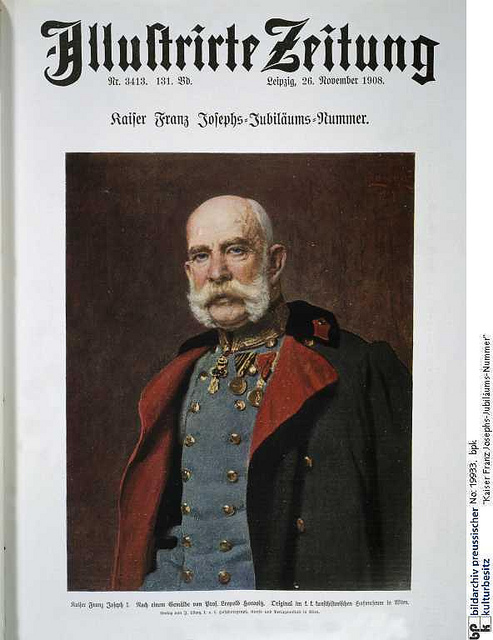
On 28 June 1914, Serbian nationalists assassinated the heir to the Austro-Hungarian throne, Archduke Franz Ferdinand in Sarajevo. Franz Joseph, Kaiser of Austria-Hungary, interpreted the killing as a direct provocation by the Serbian national government, though there was no clear evidence of their collusion. He issued a list of demands—the “July Ultimatum”—to the Serbian government, the trick being that he expected them to fail to answer them. At the same time, Austria-Hungary’s close ally, Germany, and Kaiser Wilhelm II gave Kaiser Franz Joseph a “Blank Check” that Berlin would support Vienna in any war—despite the fact that Russia, allied with France and Britain, had sworn to protect Serbia from any Austro-Hungarian aggression. The trap was set and WWI was almost destined to begin.

Surprisingly, Serbia met virtually all of Austria-Hungary’s demands by 28 July and appears to have genuinely wanted to avoid the trap set for them by Vienna. Here was an opportunity for things to have turned out very differently. After receiving a copy of the Serbian answer, Kaiser Wilhelm II saw little need for the German states to go to war in Serbia since Vienna had obtained virtually all of the concessions it had demanded. He wrote that he would not have promised Berlin’s support to Franz Joseph had he known it would be on such basis. Nonetheless, Vienna declared war on Serbia the same day and Germany remained loyal to its pledge to support Austria-Hungary.

“The lamps are going out all over Europe. We shall not see them lit again during our lifetime.”

Following the Austro-Hungarian declaration of war against Serbia, Russia mobilized its own troops for the defense of Serbia. In reaction to Russia’s mobilization, Germany mobilized its own Army and declared war against Russia on 1 August 1914. Russia had allied itself by treaty with France and, as a result, Germany declared war on France on 3 August 1914. This declaration set into motion the German military staff’s “von Schlieffen Plan”.

Austria-Hungary's Kaiser Franz Joseph I

Austria-Hungary’s Kaiser Franz Joseph I

Knowing that France had built up great defenses along its border with Germany, the von Schlieffen Plan called for German troops to avoid them by first invading neutral and undefended Belgium and Luxembourg and attacking through them into north-eastern France. This attack and its own alliance with France pulled Great Britain into a coalition with France and Russia. Five of the world’s mightiest nations were at war.

Stalemate in the trenches of Europe eventually pulled the reluctant giant America into the war. It also pulled in colonial troops from all corners of the world and ignited proxy wars and triggered defense pacts in Africa, the Middle East, and Asia. One ultimatum doomed to fail and one unconsidered promise dragged virtually the entire world into war, aggravated by a network of colonial concerns and defense treaties.

As the July Crisis unfolded and World War I began, British Foreign Secretary Sir Edward Grey remarked, “The lamps are going out all over Europe. We shall not see them lit again during our lifetime.” What lessons can be drawn from the Great War to be applied to the world today?

  • Be careful what you promise your friends and understand exactly what your friends have promised you. Most major Western states have pledged to defend Israel and recognize its right to exist and to defend itself. Rightly so. However, they have not written a “Blank Check” to Israel to conduct its wars or defensive actions in any manner it sees fit or to support all of its actions in any and all circumstances. Western presidents and prime ministers are not Kaiser Wilhelm II and Israel would do well to recognize this. So would those Western presidents and prime ministers. Israel should strongly consider whether victory in Gaza is worth risking the loss of a lot of friends. Western states should also consider at what point the cost of supporting Israel becomes too high.
  • Seemingly small events can have grave international consequences: The killing of one man by an independent group of nationalists triggered state actions that pulled all of the world’s developed nations into a world war. None of the parties considered the web of consequences such an event would have. Some were unforeseeable. Vladimir Putin appears to be gauging just how far Russia can push its chips forward before it elicits a serious response from the West. So far, the West has exhibited quite a high tolerance for pain and a will for peace, even at high cost. It has been largely thwarted by Russian maneuvering and information warfare in Syria, stood by as Moscow annexed Crimea under the thinnest of pretenses, and has so far acted with great restraint after Russian-controlled separatists downed a civilian airliner half-filled with European citizens. In other circumstances, the pro-Russian rebels and their BUK anti-aircraft missile could have played the role of the Serbian nationalist who killed Franz Ferdinand. It has not turned out that way. However, if Vladimir Putin continues to probe the West’s pain threshold, it still could. Moscow may have tested usually-forgiving European nerves—especially in the Netherlands—to the breaking point. Which states would line up on the Western side is generally clear. But who would line up in support alongside Vladimir Putin? This is something Putin himself should consider just as much as the West. Russia should also weigh up after this event whether undisciplined, trigger-happy rebels could push Moscow’s chips further forward than they want to.
  • The war you want may not be the war you get: The 9/11 attacks were the assassination of Franz Ferdinand. Much like the “July Ultimatum” of 1914 from Austria-Hungary to Serbia, in 2002 the U.S. issued Saddam Hussein, who had nothing to do with 9/11, a doomed-to-fail ultimatum to declare WMD stockpiles he did not have. The United States wanted one war in Iraq—a war of liberation from evil and tyranny—and got another—a grinding counterinsurgency and a nation to rebuild—which continues to have great and terrible consequences years down the road. Tony Blair played Kaiser Wilhelm II. Though the Global War on Terror was not WWIII, it has pulled America, Britain and its allies into a worldwide fight against terrorism and extremism in their own major cities and counterinsurgency battles across Africa, the Middle East, and Asia which continue today. Much like many of the soldiers of WWI on all sides who eventually returned home from the trenches, many of the veterans of the Global War on Terror are left scratching their heads as to what any of it has actually achieved. Even more so following ISIS’s invasion and occupation of western Iraq. And much like their WWI veteran forebears, today’s veterans are not being very well served in return by their country, as the current crisis in Congress and at the Department of Veterans Affairs shows.


CM White HouseChris Miller is a nine-year veteran of the U.S. Army, serving in nuclear, biological and chemical defense. He is a Purple Heart recipient following two tours in Baghdad, Iraq and has worked as a military contractor in the Middle East. He is a non-resident Fellow with the Truman National Security Project and currently focusing on intelligence and strategic studies at Aberystwyth University, UK. His interests are CBRN, military and veterans issues, the Cold War, and Southeast Asian, MENA and European security affairs. His writing has appeared in The Atlantic, Guardian, and other publications.


[Photos: Flickr Commons: 1) Royal Opera House Covent Garden 2) Europeana Newspapers]