
"Laws are silent in times of war."
Latest:   

By

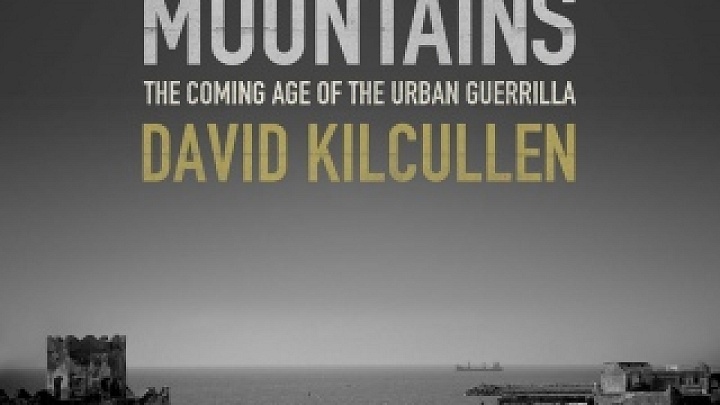
As a field of study, urban peacekeeping, counterinsurgency and warfighting have faded in recent years. Academic journals and military colleges from the second half of the 1990s to the mid-2000s saw a surge of interest. While the media’s attention may have moved on, the threats an urban environment poses to any military force hoping to operate in it remain. David Kilcullen’s latest entree on the subject, Out of the Mountains, makes that point abundantly clear.

There are obvious tactical benefits to the defender of an urban environment: the cover provided by the physical landscape, and so forth. But, for defenders facing a Western military force, the advantages are principally strategic. Militaries face three main problems: the death of noncombatants, the destruction of property, and fratricide. Densely populated and compactly built, Western militaries must avoid indiscriminate use of artillery and airpower on urban terrain, chiefly relying on infantry moving close to the enemy, exposing them to friendly fire and an up-close enemy. As a result, tactical skirmishes may have far-reaching strategic consequences to the three audiences – the population at home, the international community, and those actually living in the urban environment. These issues have not resolved themselves in the last decade, yet have been largely ignored in the age of the War on Terror.

In reading Out of the Mountains, Kilcullen begins in a similar way to standard urban warfare texts in establishing the world’s population growth and urbanization. The author points to four interrelated “megatrends” he believes will shape future human life: rapid population growth, urbanization, littoralization and interconnectedness. It is from this starting point from which the rest of the author’s work progresses, going beyond the confines of orthodox urban warfare research to attempt something much grander in scale, moving away from the work of academics, such as Alice Hills and Glenn W. Russell, and military men, including USMC General Charles Krulak and former commandant of the U.S. Army War College, Robert H. Scales.

Kilcullen brings little new to the table with the theory of competitive control. While it may be too harsh to describe competitive control as a glorified “hearts and minds” argument . . . it is difficult to describe it as anything else.

Kilcullen establishes from these four megatrends how urban centers are now under ever increasing pressure to provide services to expanding populations. The author explains this in terms of a process of metabolism; cities are living organisms which must be able to process their inputs in order to remain stable. With regards to San Pedro Sula (holding the highest murder rate of anywhere in the world), Kilcullen describes how violence is a toxic by-product of the city’s inability to metabolize undesirable deportees from America, drugs and arms, illustrating the effects of the four megatrends. From these underpinnings, Kilcullen builds his ‘theory of competitive control’ – manifestations of toxic by-products come to challenge authorities through providing a spectrum of control mechanisms that rival the established order, ranging from coercion to providing security, and exacerbated through increasing interconnectedness. It is argued that ‘true success [for states] involves achieving an agreed level of service…while also getting the violence down to a level people can accept’.

As one of numerous examples, Kilcullen refers to Hezbollah and how it successfully draws on a wide spectrum of control, providing public services where the Lebanese government cannot, while also relying on coercion. Al-Qaeda in Iraq, however, was displayed to rule simply through coercion, leading to their defeat (though this point may be overtaken by recent events in Iraq). The author also utilizes contemporary examples, especially from the Arab Spring, to make the important point that cities are becoming increasingly networked, especially through social media, while possibly placing too much weight on this as being a determining factor of unrest.

Although Kilcullen’s work may be impressive in scope, tackling topics from social movement theory to the role of technology, in part because of this, his work attempts to say everything, but ends up saying little we did not already know. As noted, Kilcullen begins by exploring the four megatrends of future human life. Whilst novel when put together, the four megatrends have been explored in some detail for decades when taken in isolation. More damningly, however, is the lack of a concerted effort by Kilcullen to look at potential (and very real) hindrances to massive population growth and resulting urbanization in the Twenty-First Century, such as issues found in food and water security and health security literatures. The world is facing numerous potentially disastrous environmental and health challenges this century. Simply assuming that the world will continue spinning as it has done is not a solid basis for the construction of a theory.

On urban metabolism and social movement theory, Kilcullen’s work suffers from being ill-defined at points. When speaking of “metabolism”, much time is spent looking into things like inputs, processing, etc., but the reader still comes away not knowing exactly what Kilcullen means by the term “metabolism”. ‘Violence’ is equally vague, with it not being clear exactly what sort of violence the author has in mind? terrorist acts? Sexual violence? And is there anything unifying groups as diverse as international narcotics traffickers, political protesters and local gangs? These aspects of Kilcullen’s argument remain imprecise throughout, despite being relied on so heavily. While such broad strokes may be acceptable for light airport reading, it is worrying that his book will be read at the heights of power when such vague definitions exist throughout the text. These may be words related to fashionable academic topics which bring in fresh perspectives, but when they are used so liberally and without consideration as to what is being said by the words, the argument itself is left ill-defined.

U.S. Army soldiers training in urban warfare.

Kilcullen’s theory itself is unoriginal and disappointing. For a start, the author acknowledges that the idea behind competitive control comes from a counterinsurgency theorist writing over forty years ago. Furthermore, it is also clear that even recent urban warfare literature acknowledges its underpinning ideas. US Army FM 3-06 (2006), for example, states –

“Rapid and inadequately planned growth can result in undesirable consequences. Uncontrolled urbanization may result in an infrastructure and economic base unable to support the growing population. A large transient, ill-housed, and idle population in a close geographic space may produce strife. Classes, cultures, ethnic groups, and races that might otherwise peacefully coexist can clash under the stress of survival.”

Kilcullen brings little new to the table with the theory of competitive control. While it may be too harsh to describe competitive control as a glorified “hearts and minds” argument directed at urban centers and bringing in fashionable ideas surrounding technology and social movements, it is difficult to describe it as anything else.

Ultimately, this is a book which, while a page-turner in many places, does little to add to the existing urban warfare literature. Instead, Kilcullen’s book brings together various faddish topics to effectively say everything and nothing, adding little to them through his somewhat clumsy use of certain terms. Although Kilcullen should be commended for bringing the eyes of strategists back to the ever-present danger of urban warfare, the manner in which he has gone about it is not helpful to the literature on the whole. This being said, this author hopes that more insightful, practical and original contemporary ideas on urban warfare would flow from Kilcullen’s efforts.

[Photos: Flickr Commons]


FacebookTwitterGoogle+Print
About the Author

Peter Storey is a graduate of Sheffield University and Aberystwyth University in the United Kingdom. He is currently working as an international market reporter in London. His interests include issues surrounding urban warfare and asymmetric warfare more broadly, the War on Terror, and British foreign and defense policy. He is an Associate Editor at Cicero Magazine.


Leave a Reply